
DSIP-Delta Sleep Inducing Peptide
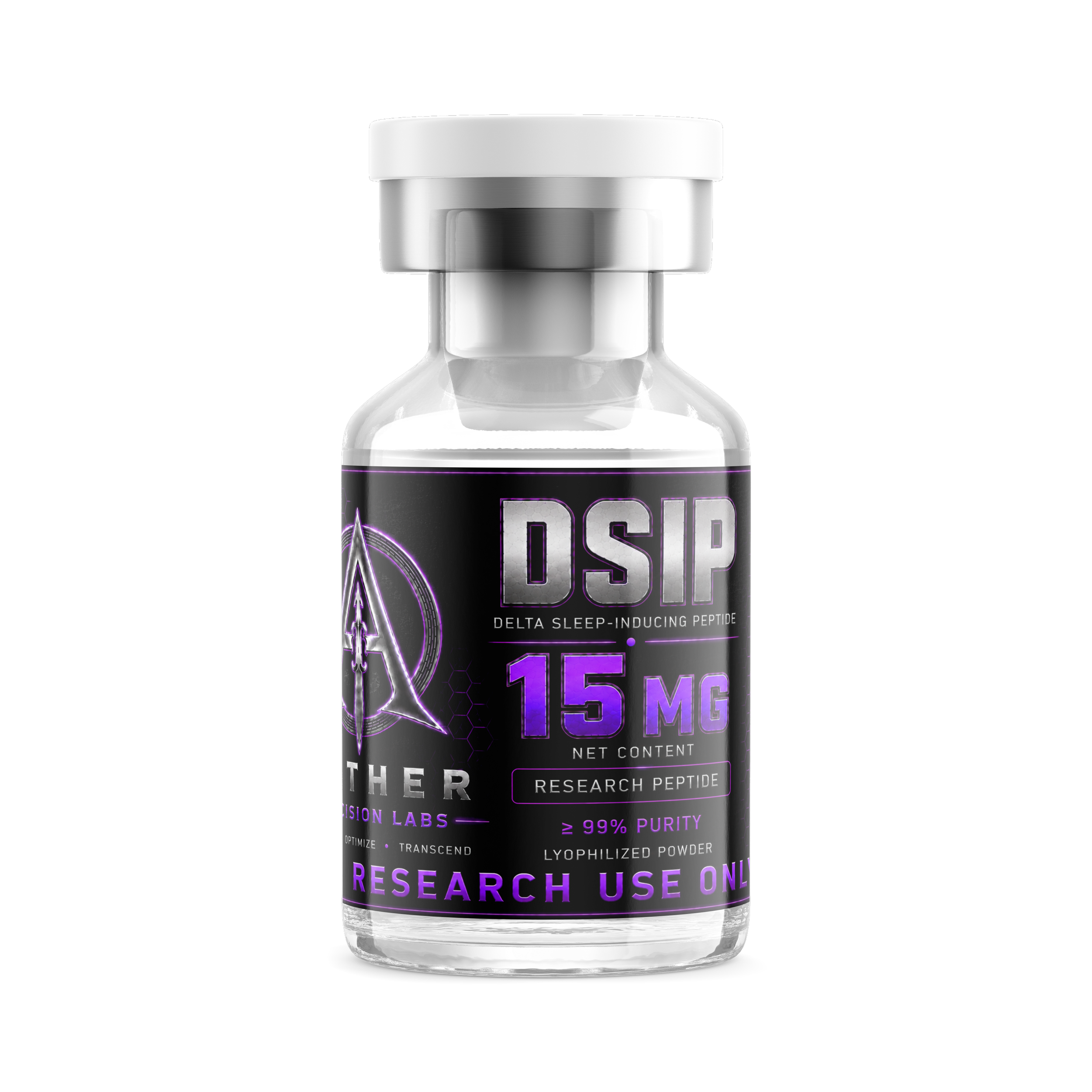
Investigated for sleep regulation and neurophysiology research.
Third-party verified for identity and purity.
Intended for laboratory research use only, NOT FOR HUMAN USE.
View Aether Verification Report
Reports
Specifications
Product
Strength
Components
Appearance
Purity
Use
Storage
DSIP
10 mg & 15 mg
Delta sleep-inducing peptide
White Lyophilized Peptide
>99%
Research Use Only
Refrigerate 36 - 46F (2 - 8C) after reconstitution
Neuropeptide Research Compound
Delta Sleep-Inducing Peptide (DSIP) is an endogenous neuropeptide that has been studied in connection with sleep regulation, stress responses, and neuroendocrine signaling.
Research has investigated DSIP for its potential role in sleep-related pathways, including interactions with physiological processes associated with sleep and circadian regulation.
Research focus: Sleep regulation • Neuroendocrine signaling • Stress response • Neurophysiology
Mechanism of Action
Neuroendocrine Research
DSIP has been investigated for its effects on sleep-wake regulation, including slow-wave/delta sleep activity. Early experimental research demonstrated changes in delta EEG activity following DSIP administration.
Circadian & Physiological Signaling
Research has examined DSIP in relation to neuroendocrine signaling and physiological processes associated with sleep, stress, and circadian regulation. Its broader physiological role remains an area of investigation.
Sleep-Wake Signaling
Studies have reported DSIP-related effects involving circadian patterns, electrophysiological activity, neurotransmitter systems, and other physiological responses. The precise molecular mechanism and receptor responsible for DSIP activity have not been definitively established.
Research Overview
Delta Sleep-Inducing Peptide (DSIP) is a nine-amino-acid neuropeptide originally identified through research investigating endogenous factors associated with sleep. Experimental studies have investigated its relationship to slow-wave sleep, delta EEG activity, circadian patterns, and neuroendocrine processes.
Research has produced evidence of sleep-related effects under certain experimental conditions, including changes in slow-wave/delta activity. However, the physiological role of DSIP and its precise mechanism of action remain incompletely understood, with later reviews noting that the proposed sleep-regulating role remains unresolved.
Research areas include: Sleep regulation • Slow-wave sleep • Circadian signaling • Neuroendocrine function • Neurophysiology
For laboratory research use only. Not intended for human or veterinary use.