
PT-141 10 mg
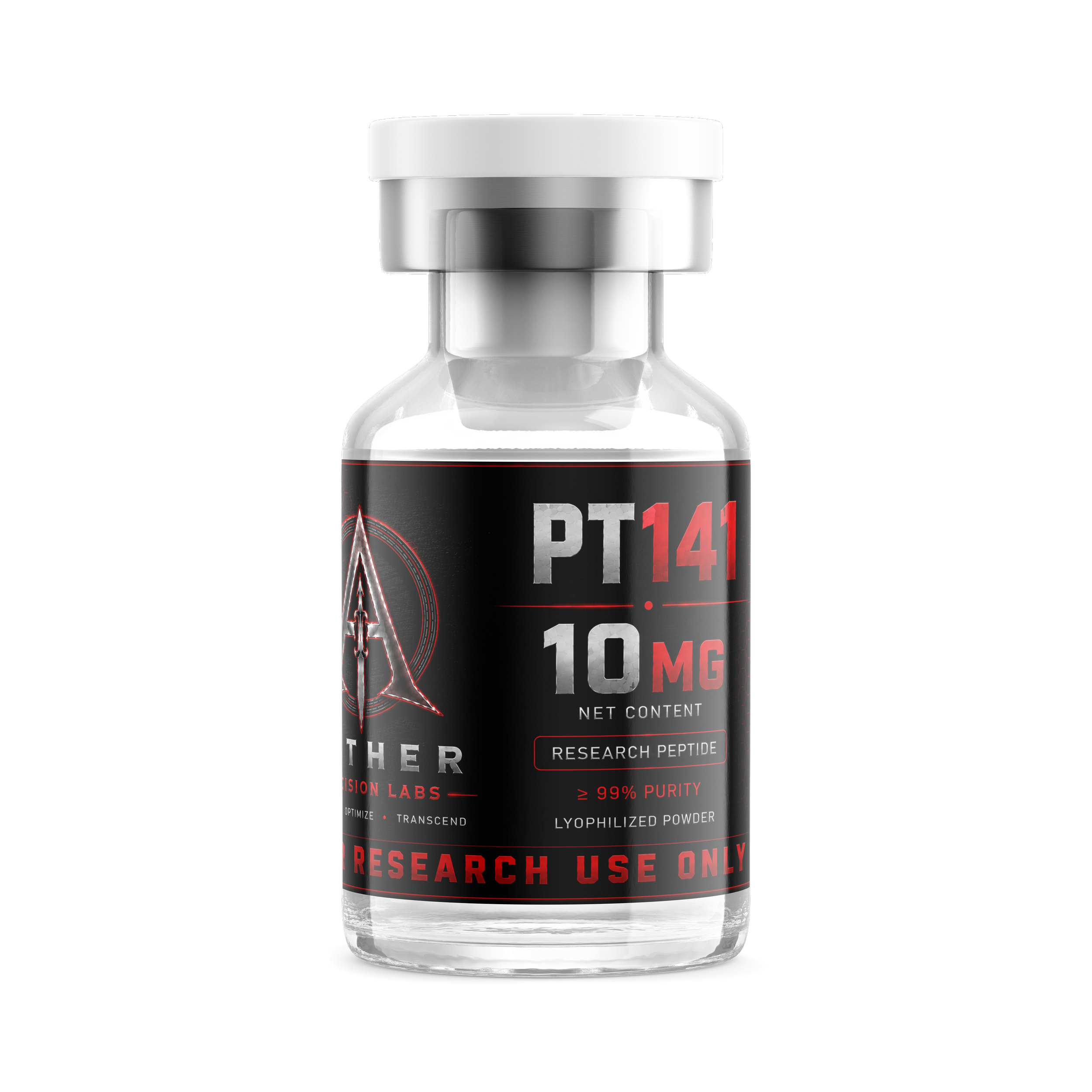
Investigated for melanocortin receptor research.
Third-party verified for identity and purity.
Intended for laboratory research use only, NOT FOR HUMAN USE.
View Aether Verification Report
Reports
Specifications
Product
Strength
Components
Appearance
Purity
Use
Storage
PT-141
10 mg
Bremelanotide - Synthetic Melanocortin Receptor Agonist
White Lyophilized Peptide
>99%
Research Use Only
Refrigerate 36 - 46F (2 - 8C) after reconstitution
Melanocortin Receptor Agonist Research Peptide
PT-141 (Bremelanotide) is a synthetic melanocortin receptor agonist studied for its effects on sexual function and related neurological pathways. Research has focused on its activity at melanocortin receptors, particularly MC3R and MC4R, which are involved in central nervous system signaling and sexual behavior.
Studies have investigated PT-141 in the context of sexual arousal, motivation, and melanocortin-mediated signaling, making it a compound of interest in neuroendocrine and behavioral research.
Mechanism of Action
Sexual Function Research
Acts primarily through melanocortin receptors, particularly MC4R, which are involved in central neural pathways associated with sexual motivation, arousal, and behavioral signaling.
Melanocortin Signaling
PT-141 has been extensively studied for its effects on sexual desire and arousal. Clinical research has demonstrated measurable effects on sexual-function endpoints in controlled studies.
MC4R Activation
Research on PT-141 investigates melanocortin-mediated signaling within the central nervous system, including pathways involving MC3R and MC4R and their role in physiological and behavioral responses.
Research Overview
PT-141 (Bremelanotide) is a synthetic melanocortin receptor agonist and analog of α-melanocyte-stimulating hormone. Research has primarily focused on its activity at MC3R and MC4R, with particular interest in central melanocortin signaling and sexual-function pathways.
Preclinical and clinical studies have investigated PT-141 in relation to sexual desire, arousal, motivation, and erectile physiology. Unlike traditional PDE5 inhibitors, its primary mechanism is understood to involve central melanocortin pathways rather than directly producing peripheral vasodilation.
Research has also examined the relationship between melanocortin receptor activation and nitric-oxide signaling and vascular responses associated with sexual physiology. These findings should not be interpreted as evidence that PT-141 acts as a general skeletal-muscle vasodilator or exercise-performance enhancer.
Controlled clinical studies have demonstrated statistically significant effects on sexual-desire measures, while also documenting transient cardiovascular effects such as increases in blood pressure.
PT-141 continues to be investigated as a research compound for understanding melanocortin receptor signaling, neuroendocrine pathways, and sexual-function physiology.
For laboratory research use only. Not intended for human or veterinary use.