
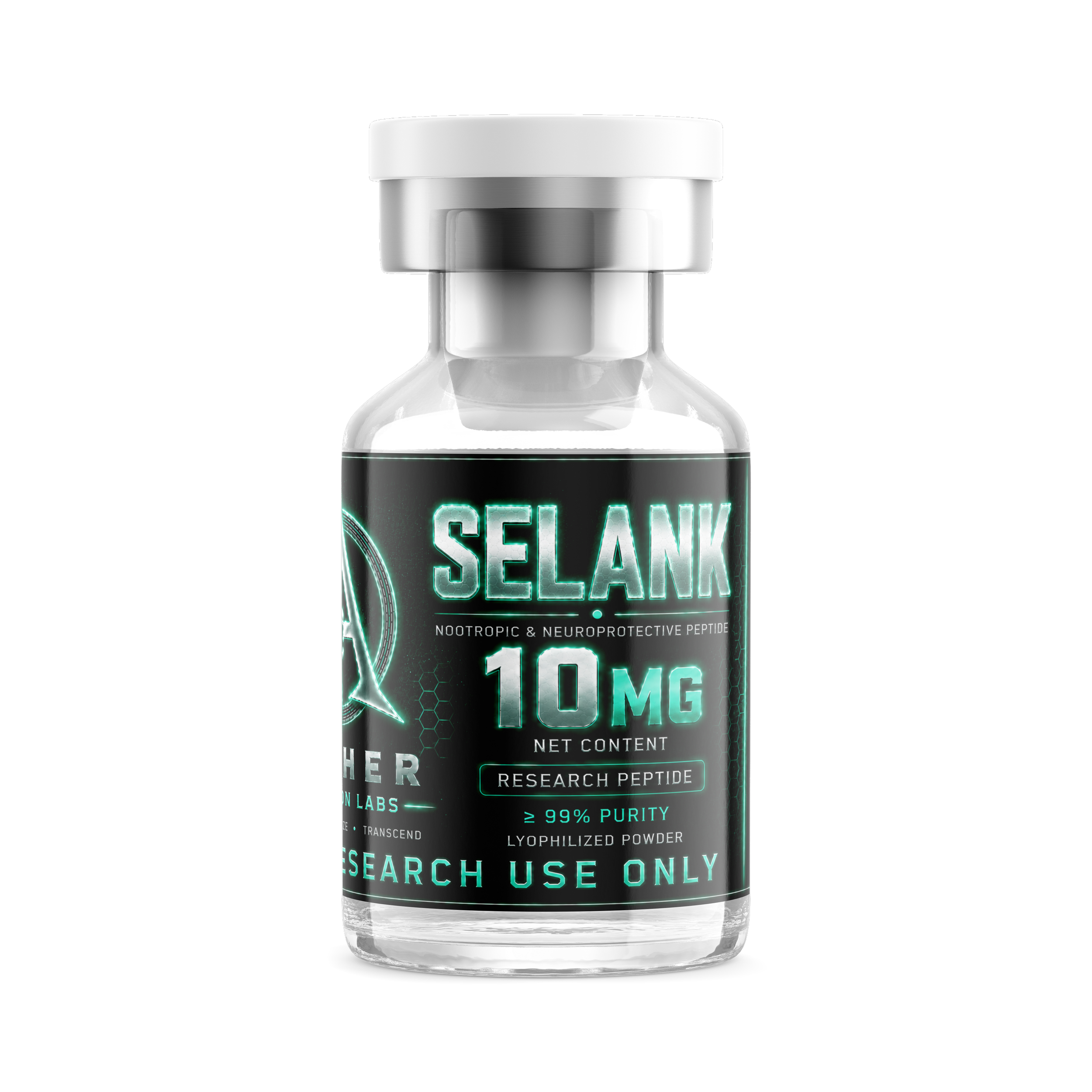
Investigated for anxiolytic and neurocognitive research.
Third-party verified for identity and purity.
Intended for laboratory research use only, NOT FOR HUMAN USE.
Selank 10 mg
Reports
Specifications
Product
Strength
Components
Appearance
Purity
Use
Storage
Selank
10 mg
Selank Nootropic
White Lyophilized Peptide
>99%
Research Use Only
Refrigerate 36 - 46F (2 - 8C) after reconstitution
Neurocognitive & Stress Response Research
Selank is a synthetic peptide analogue studied for its potential effects on cognitive function, stress response, and neurological signaling. Research has explored its interactions with GABAergic pathways and its potential role in attention, memory, and emotional regulation.
Mechanism of Action
GABAergic
Research peptide studied for its potential interaction with GABAergic neurotransmitter pathways and related neurological signaling.
Cognitive Function
Investigated in research involving attention, memory, learning, and other aspects of cognitive performance.
Stress Response
Studied for its potential effects on pathways associated with stress response, emotional regulation, and neurological homeostasis.
Research Overview
Selank is a synthetic peptide that has been investigated for its potential effects on neurological signaling, cognitive function, and stress-related pathways. Research has particularly examined its relationship with GABAergic signaling and its potential influence on neurotransmitter activity.
Research involving Selank has explored areas including attention, memory, learning, emotional regulation, and the body’s response to stress. Its mechanisms remain an area of continued scientific investigation.
Selank continues to be studied as a research compound for understanding neurochemical signaling and the biological pathways involved in cognitive and stress-related processes.
For laboratory research use only. Not intended for human or veterinary use.